


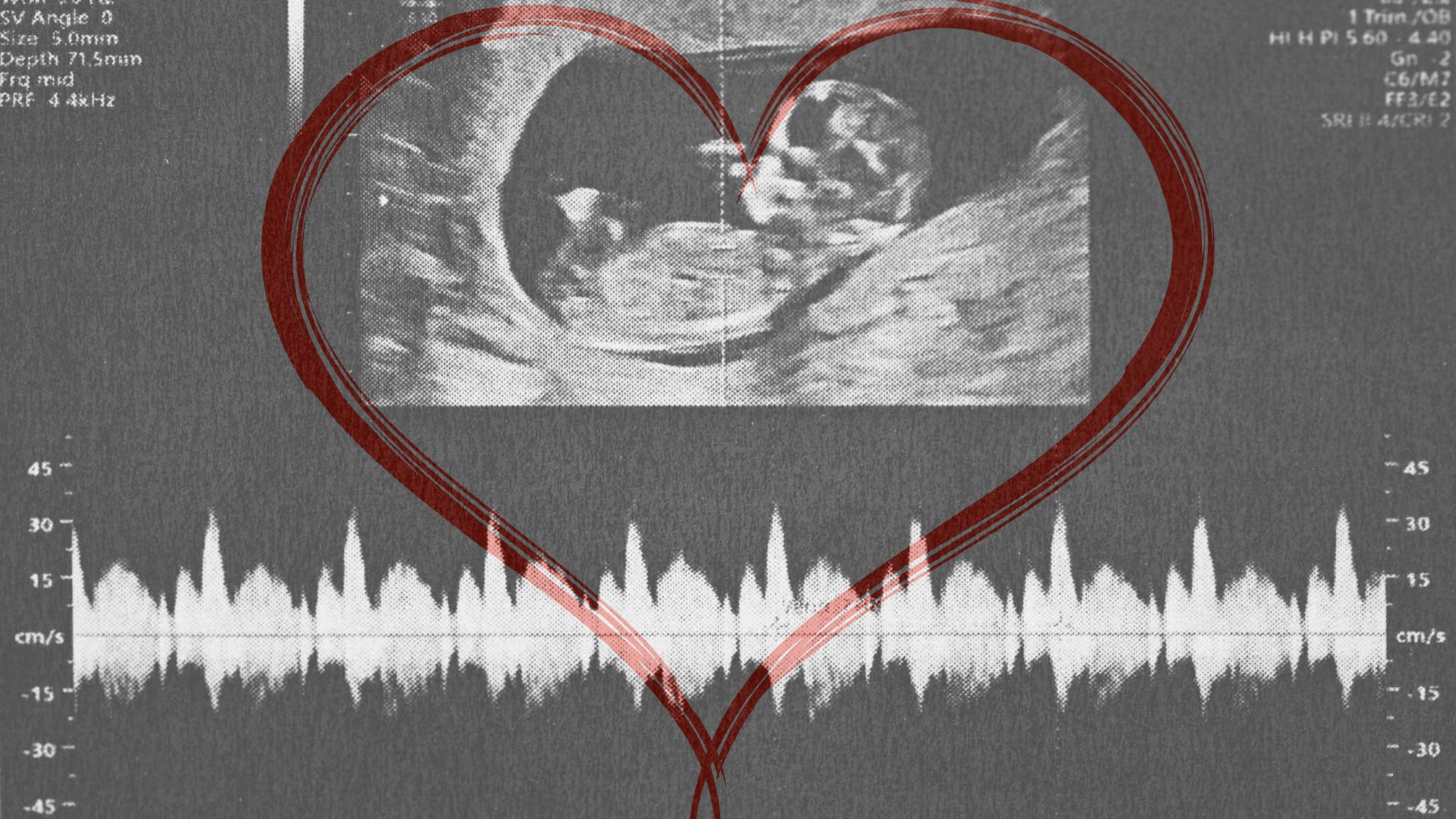
Jesus and John being truly human from the moment conception teaches us that all embryos are as well, but these truths come primarily from the New Testament. What about the Old Testament? Are Jesus and John the exception to the rule, or do they further a rule that’s throughout Scripture? God gives us the answer through Moses in the laws He gave to Ancient Israel.
Ancient Israel’s History
After God delivered Israel from slavery in Egypt, He brought them to Mount Sinai and established His covenant with them. He gave them commandments governing their worship, relationships, and responsibilities to one another. These laws revealed not only what God prohibited, but also what He demanded to be protected.
Israel had spent many generations, hundreds of years, under Egyptian rule, surrounded by the worship of many false gods. God called them out of Egypt as His peculiar people, requiring that they reject all other gods and worship Him only. Their entire lives were commanded to be ordered around Him.
He forbade murder in His sixth commandment (Ex 20:13). And then He defined murder a few verses later in Exodus 21:12-14:
12 “Whoever strikes a man so that he dies shall be put to death. 13 But if he did not lie in wait for him, but God let him fall into his hand, then I will appoint for you a place to which he may flee. 14 But if a man willfully attacks another to kill him by cunning, you shall take him from my altar, that he may die.
God defined murder as the intentional killing of an innocent person. If someone accidentally killed someone, God would set up a place where they could flee and live. But if they murdered someone, the guilty were to be killed.
Disagreements Over Translation
Further into Exodus 21, God gives more details for applying the command against murder to the most vulnerable among them: pregnant mothers and their unborn babies. He says,
22 “When men strive together and hit a pregnant woman, so that her children come out, but there is no harm, the one who hit her shall surely be fined, as the woman’s husband shall impose on him, and he shall pay as the judges determine. 23 But if there is harm, then you shall pay life for life, 24 eye for eye, tooth for tooth, hand for hand, foot for foot, 25 burn for burn, wound for wound, stripe for stripe (Ex 21:22-25).
If men were fighting and accidentally hit a pregnant lady, and she gave birth, if there was no harm, the guilty party would be fined. But, if either the mother or the baby died, the guilty man would be killed. That is the clear reading of the text, but there has been much debate over this interpretation for over 400 years.
Most of church history has understood verse 22 as referring to a miscarriage rather than a live birth.[1] This mistaken understanding came from two main sources: the Septuagint (LXX), the Greek translation of the Hebrew Old Testament written between the third and first centuries BC,[2] and the Latin Vulgate, Jerome’s translation of the Bible written between 390 and 405 AD.[3] They translated Exodus 21:22 as referring to a miscarriage:
LXX: “And if two men strive and strike a woman with child, and her child is born imperfectly formed, he shall be forced to pay a penalty: as the woman’s husband may lay upon him, he shall pay with a valuation.”
Latin Vulgate: “If men quarrel, and one strike a woman with child and she miscarry indeed, but live herself: he shall be answerable for so much damage as the woman’s husband shall require, and as arbiters shall award.”
The difference between the Hebrew and these translations is clear: they interpreted the Hebrew words rather than translating them literally, arguing for a miscarriage; the baby is “imperfectly formed” and dies, but the mother is unharmed. The penalty is merely financial. The problems are twofold: 1) there is a Hebrew word that is most used for miscarriage in the Old Testament, shakol, and it is not present in Exodus 21:22 (Ex 23:26; Hos 9:14), and 2) the Hebrew word “harm” (acown) is indefinite, which means it should apply to both the baby and mother as having no fatal harm rather than only the mother.
These translations’ interpretation dominated the early and medieval church for at least two reasons: 1) The LXX is quoted repeatedly in the New Testament, even more than the Hebrew, which makes it the most authoritative translation in history.[4] 2) Most of the early church and medieval fathers knew Greek and Latin but did not know Hebrew. Thus, they primarily read the LXX and the Vulgate, not the Hebrew.[5]
These two realities created a perfect storm for misunderstanding this text. After all, just because the LXX is quoted more than the Hebrew in the New Testament, does not mean the entire LXX is Scripture; only the words quoted are Scripture because they accurately translated the Hebrew or they served as useful to the New Testament Scripture-writer. And the Vulgate, though extremely influential in church history, is not Scripture either where it disagrees with the original autographs.[6] Translations serve Scripture and are only faithful when they accurately translate the words of the Scripture-writers.
As a result of their influence from the church fathers through Thomas Aquinas to the Reformation, all leaders’ writings presented Exodus 21:22 as referring to a miscarriage. The Protestant Reformer, John Calvin, was the first Christian leader in recorded church history to interpret the verse as referring to a live birth.[7]
But what does the Hebrew say?
